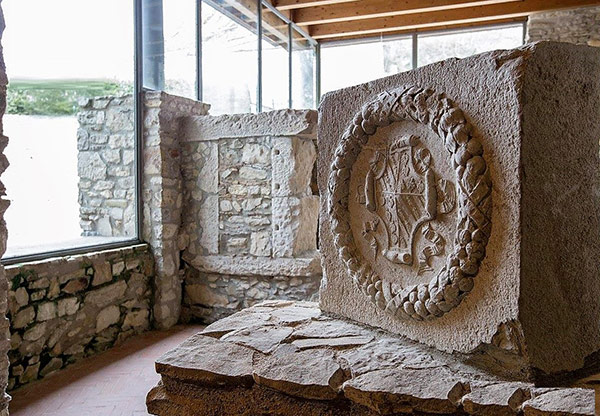
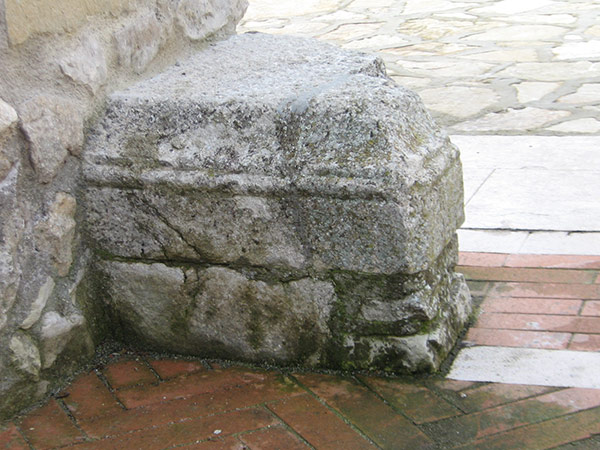
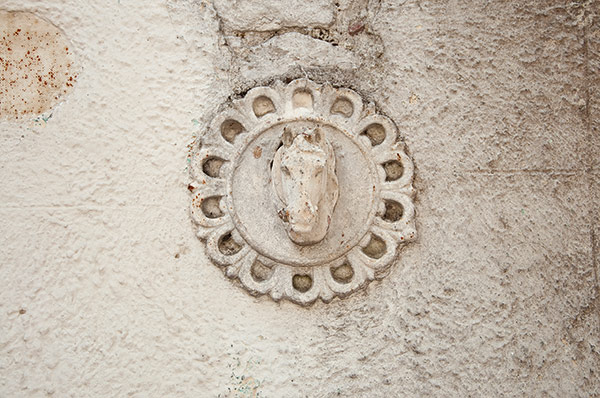
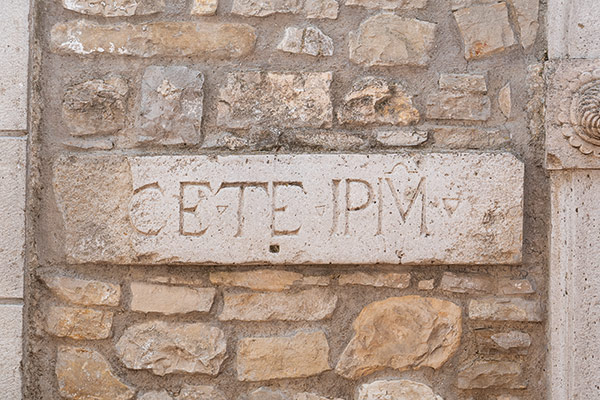
Boundary stones, popular belief and living memory between Irpinia and Daunia
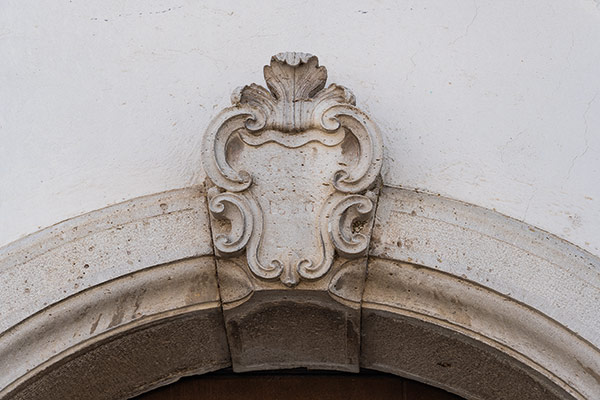
Savignano Irpino boasts an artistic and historical heritage that is remarkable for a border village; it was founded as a stronghold between Irpinia and Daunia and has been shaped over the centuries by wars, earthquakes and reconstruction. Its identity unfolds like a ‘layered’ narrative: secular and religious architecture, symbols of collective memory, and stones that bear witness to popular devotion and ancient defensive functions.
The oldest part of the town is the area between Porta Grande and the Castello de Guevara: here, the medieval village was nestled amongst walls, passageways and panoramic terraces. Although marked by destruction and alterations, the castle retains the austere dignity of its original layout and still dominates the Cervaro Valley from the Belvedere della Tombola. Along Via dei Finestroni, amongst the cobblestones and masonry incorporated into the houses, one can sense the continuity of the ancient defences: arches, reused stones, traces of a village that has transformed itself without losing its character.
Savignano Irpino, a museum in the open air, amidst faith, history and the countryside
The Land of Churches
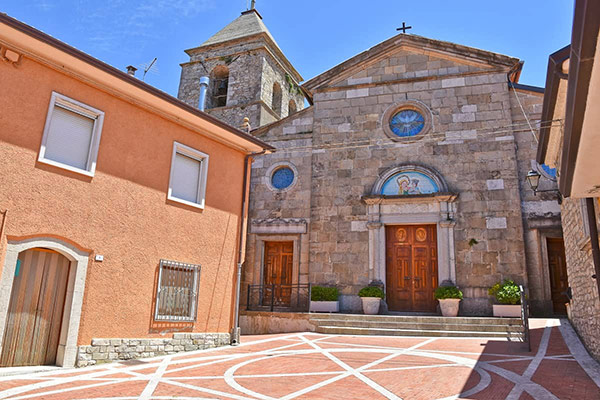
Alongside its military heritage, Savignano is, above all, a ‘town of churches’. The Mother Church of St Nicholas the Bishop, with its bell tower originally built as a watchtower, is the town’s spiritual and urban landmark: the façade, built of local stone, the portals, the chapels and the furnishings all bear witness to an ongoing dialogue between art and the community.
Memory and Rituals
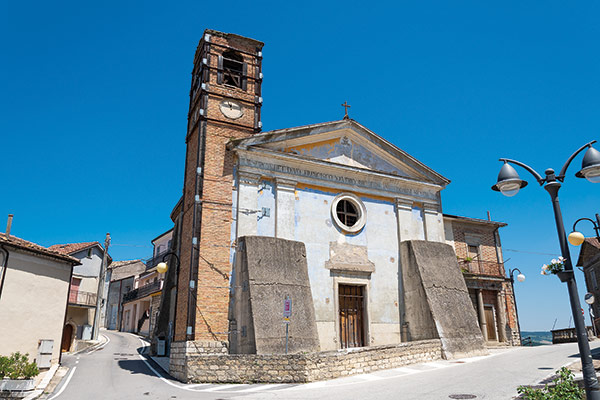
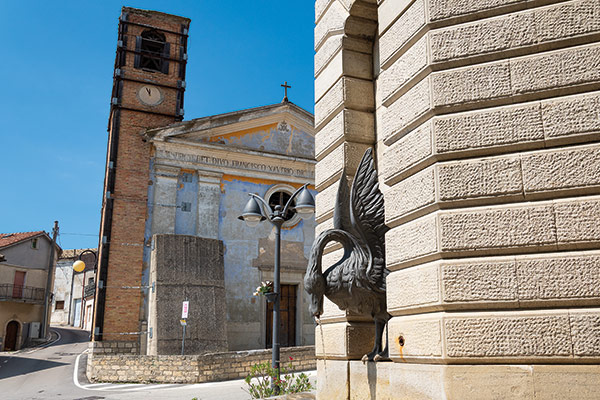
The Church of Purgatory, with its stone portal, rose window and neoclassical design, bears witness to a culture of remembrance and ritual: here, the symbols and even the dialectal language (“la coccj d’ muort”) become part of the intangible cultural heritage.
The People’s Church
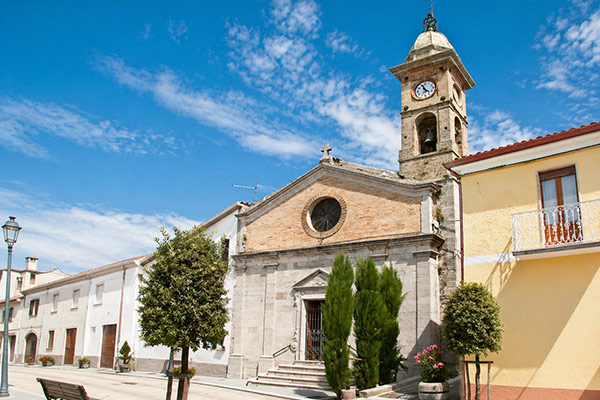
The Church of Our Lady of Grace – known as the ‘people’s church’ – serves as a reminder of the town’s expansion beyond its ancient gates and of the significance of a place designed to welcome those arriving from the countryside.
Places of Identity
The stretch of Corso Vittorio Emanuele is home to many landmarks: the Fontana Angelica, affectionately known as the ‘Fontana delle papere’, is a small community monument, a meeting place and an everyday symbol; a little further on, squares, memorial plaques and views come together to form an emotional landscape that is passed down through stories.
Community Architectures
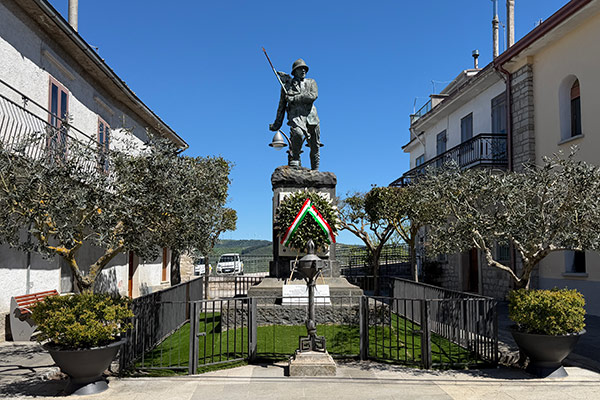
The town’s architectural heritage completes the picture: Palazzo Orsini, now the Town Hall, which began life as a hospitius and hospital commissioned by Benedict XIII, speaks of hospitality and care; historic buildings and commemorative inscriptions preserve the memory of local figures and events that have become part of the town’s history. In the squares and along the streets, war memorials and plaques intertwine the grand narrative of history with the personal stories of the people of Savignano.
Landscape as Narrative
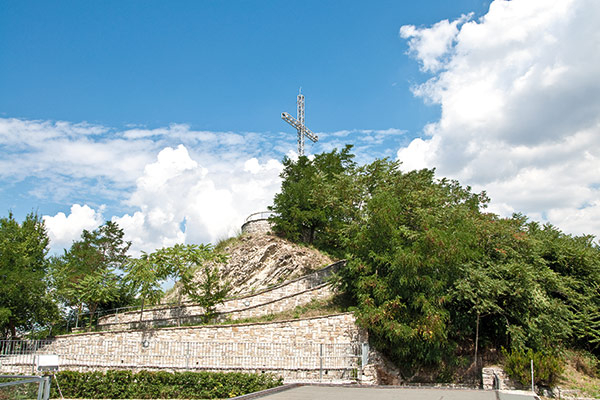
Finally, the landscape itself forms part of the work: rural fountains, scattered chapels, crosses on Calvario and Tombola, footpaths and viewing points come together to form an open-air museum, where art, faith and nature coexist. Savignano offers a cohesive experience, made up of stone, memory and sweeping views across the valley – a heritage to be listened to and recounted, even before it is visited.
This website uses cookies: by clicking ‘OK’ or continuing to browse the site, you consent to the use of cookies. OKDeclineFurther Information
Privacy & Cookies Policy
Privacy Overview
This website uses cookies to improve your experience while you navigate through the website. Out of these, the cookies that are categorized as necessary are stored on your browser as they are essential for the working of basic functionalities of the website. We also use third-party cookies that help us analyze and understand how you use this website. These cookies will be stored in your browser only with your consent. You also have the option to opt-out of these cookies. But opting out of some of these cookies may affect your browsing experience.
Necessary cookies are absolutely essential for the website to function properly. These cookies ensure basic functionalities and security features of the website, anonymously.
Cookie
Duration
Description
cookielawinfo-checbox-analytics
11 months
This cookie is set by GDPR Cookie Consent plugin. The cookie is used to store the user consent for the cookies in the category "Analytics".
cookielawinfo-checbox-functional
11 months
The cookie is set by GDPR cookie consent to record the user consent for the cookies in the category "Functional".
cookielawinfo-checbox-others
11 months
This cookie is set by GDPR Cookie Consent plugin. The cookie is used to store the user consent for the cookies in the category "Other.
cookielawinfo-checkbox-necessary
11 months
This cookie is set by GDPR Cookie Consent plugin. The cookies is used to store the user consent for the cookies in the category "Necessary".
cookielawinfo-checkbox-performance
11 months
This cookie is set by GDPR Cookie Consent plugin. The cookie is used to store the user consent for the cookies in the category "Performance".
viewed_cookie_policy
11 months
The cookie is set by the GDPR Cookie Consent plugin and is used to store whether or not user has consented to the use of cookies. It does not store any personal data.
Functional cookies help to perform certain functionalities like sharing the content of the website on social media platforms, collect feedbacks, and other third-party features.
Performance cookies are used to understand and analyze the key performance indexes of the website which helps in delivering a better user experience for the visitors.
Analytical cookies are used to understand how visitors interact with the website. These cookies help provide information on metrics the number of visitors, bounce rate, traffic source, etc.
Advertisement cookies are used to provide visitors with relevant ads and marketing campaigns. These cookies track visitors across websites and collect information to provide customized ads.