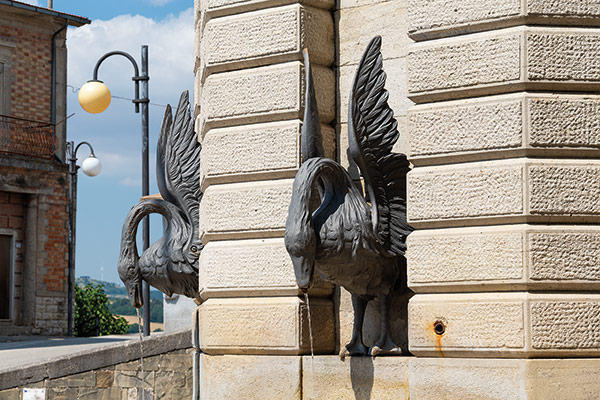
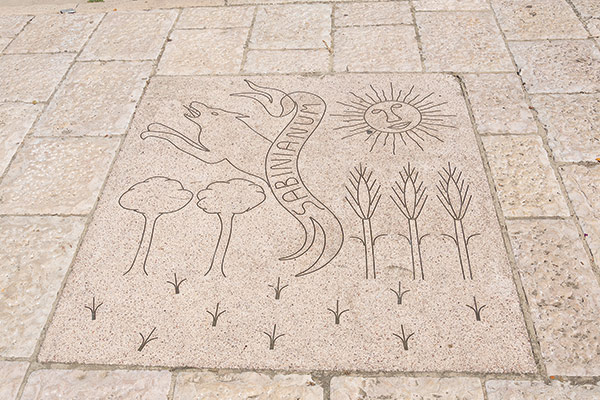
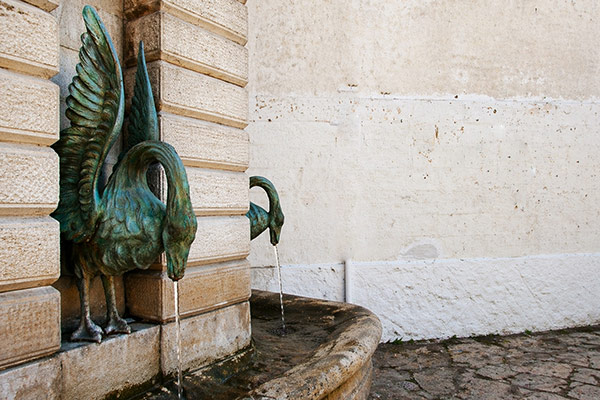
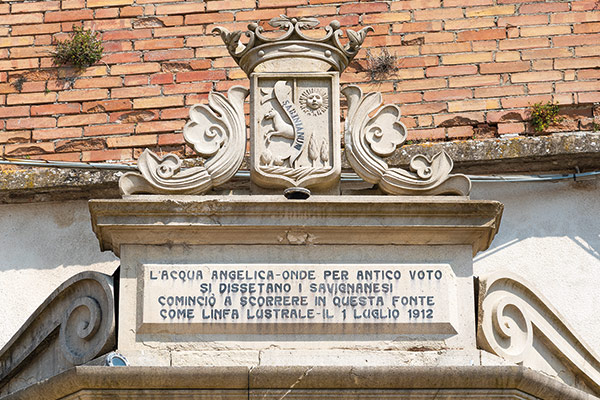
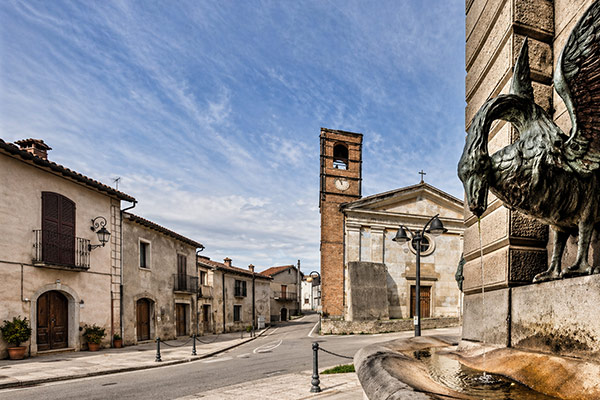
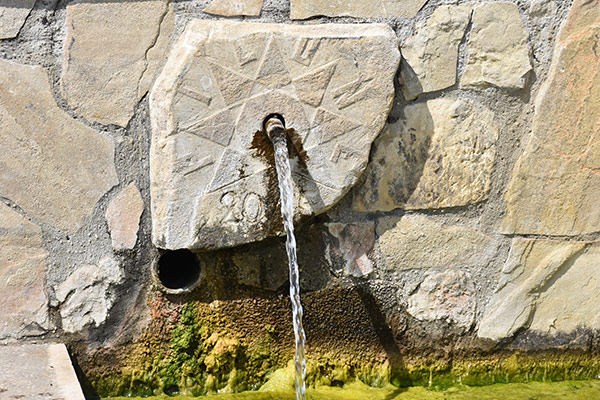
In Savignano Irpino, water is not just a resource: it is a collective narrative, a daily ritual, a deep-rooted tradition. The most recognisable landmark is the Fontana Angelica, in the heart of the historic centre, fed by the springs of Monte Sant’Angelo. Designed and built in 1912 by Federico Castelluccio of Manteleone di Puglia, it marks a decisive turning point in the town’s history: the end of the chronic water shortage. From the mouths of three elegant cast-iron swans – affectionately nicknamed ‘ducks’ by the people of Savignano – flows ‘Acqua Angelica’, as the inscription carved into the stone states: “THE ANGELIC WATER […] BEGAN TO FLOW FROM THIS SPRING AS PURIFYING WATER ON 1 JULY 1912.”
Before the aqueduct was built, the fountain was a labour of love and a community hub. At dawn, the women would queue up with handkerchiefs tied around their heads to cushion the weight of the water basins. Those who were unable to carry the water relied on the water-carriers. Around the fountain, words, silences and confidences intertwined: it was the heart of the village.
Rural fountains: a geography of water
As well as the Fontana Angelica, the area is dotted with numerous springs, testifying to the region’s extraordinary abundance of water. Among these, the Fontana di Mottola stands out: once an ancient natural pool, it was later transformed into a complex system of three fountains. Its waters fed the ‘Canale Magone’ and the Tanchino mill, playing a vital role in the local economy. Today, the area has been developed into a well-equipped green space, an ideal spot for a break or a picnic surrounded by nature.
Other Fountains
Lu P’rato Fountain – Featuring troughs for cattle and sheep, as well as a domestic water supply, it was installed in the 1950s when water from the wells began to run low.
Poto Fountain – Rebuilt in 1955 with a remarkable array of decorative features.
Fasulo Fountain and Ceraso Fountain – Essential, linked to sheep farming; the second of which has now been abandoned.
Lu P’lone Fountain and Fountain of Mrs – Similar to the Ferrara; the latter is one of the most generous in terms of portion size and quality.
Catini Fountain – It symbolically marks the border between Campania and Puglia.
Cavallarisi Fountain – Once situated in the heart of the bush, rebuilt in the early 2000s.
The Fountains of Pescara di Sotto and Pescara di Sopra – A meeting place for washerwomen, who also found the clay used as soap here.
Minghillisi Fountain – Linked to an old Savignano family; now in a state of neglect.
Ciccotonno Fountain – Linked to the channelling of the springs carried out in 1912; the washhouse was added in 1954.
Lu Pisciariello Fountain – For centuries, it was the main source of water before the Fontana Angelica.
Vitacchio Fountain in Licese – Opened in 1953, it holds a photographic record of its opening.
The Sudana Fountain, Jungera Fountain and Impaccata Fountain – Linked to pastures, reeds used for weaving, and the watering of Podolica cattle.
A heritage to be preserved
The fountains of Savignano are not merely man-made structures: they are architectural expressions of water that tell the story of the rural economy, religious devotion, women’s labour, transhumance and boundaries. Where water flows, history flows. And in Savignano Irpino, every spring is a living page of shared memory.
This website uses cookies: by clicking ‘OK’ or continuing to browse the site, you consent to the use of cookies. OKDeclineFurther Information
Privacy & Cookies Policy
Privacy Overview
This website uses cookies to improve your experience while you navigate through the website. Out of these, the cookies that are categorized as necessary are stored on your browser as they are essential for the working of basic functionalities of the website. We also use third-party cookies that help us analyze and understand how you use this website. These cookies will be stored in your browser only with your consent. You also have the option to opt-out of these cookies. But opting out of some of these cookies may affect your browsing experience.
Necessary cookies are absolutely essential for the website to function properly. These cookies ensure basic functionalities and security features of the website, anonymously.
Cookie
Duration
Description
cookielawinfo-checbox-analytics
11 months
This cookie is set by GDPR Cookie Consent plugin. The cookie is used to store the user consent for the cookies in the category "Analytics".
cookielawinfo-checbox-functional
11 months
The cookie is set by GDPR cookie consent to record the user consent for the cookies in the category "Functional".
cookielawinfo-checbox-others
11 months
This cookie is set by GDPR Cookie Consent plugin. The cookie is used to store the user consent for the cookies in the category "Other.
cookielawinfo-checkbox-necessary
11 months
This cookie is set by GDPR Cookie Consent plugin. The cookies is used to store the user consent for the cookies in the category "Necessary".
cookielawinfo-checkbox-performance
11 months
This cookie is set by GDPR Cookie Consent plugin. The cookie is used to store the user consent for the cookies in the category "Performance".
viewed_cookie_policy
11 months
The cookie is set by the GDPR Cookie Consent plugin and is used to store whether or not user has consented to the use of cookies. It does not store any personal data.
Functional cookies help to perform certain functionalities like sharing the content of the website on social media platforms, collect feedbacks, and other third-party features.
Performance cookies are used to understand and analyze the key performance indexes of the website which helps in delivering a better user experience for the visitors.
Analytical cookies are used to understand how visitors interact with the website. These cookies help provide information on metrics the number of visitors, bounce rate, traffic source, etc.
Advertisement cookies are used to provide visitors with relevant ads and marketing campaigns. These cookies track visitors across websites and collect information to provide customized ads.